Stirling,
I haven't beaten Final Fantasy XII. I've progressed as far as the City of Archades, and my game is saved in there somewhere.
That game puts me at odds with myself. On the one hand, the game is beautiful. The setting of FFX may be prettier in itself, but XII's attention to detail (and controllable camera) take it to another level. Also, the storyline is much, much deeper than that of any RPG I've ever played. It's full of intrigue, diplomacy, espionage, and statecraft, and all of its mysteries are only slowly revealed. Trying to keep track of the competing motivations of each of the characters reminds me of reading Balzac or Dostoevsky. And unlike in FFX, the voice acting adds to the appeal of the game.
But it has its own set of problems. Like FFX, it suffers from Yellow Brick Road-syndrome: the mini-map makes it so easy to determine where you need to go that you never really end up exploring. You just follow the Yellow Brick Road from the beginning of the game to the end.
Also, the characters are not very distinct from one another in terms of their abilities. There's nothing stopping you from making Basch a wizard, or Fran a tank. Just acquire the relevant licenses from the license board. Somewhat related to that concern is this: I can't remember a single instance in the entire game where I had to change out my party members. At first, you might think it's nice to only have to deal with the characters you like. But every time you go to the menu, you'll be reminded, like I am, that you're wandering the world of Ivalice with three characters above level 40, and three characters around level 12. This is aggravating, and a better-designed game would give you some sort of incentive to try different party combinations. But since each character is so customizable, there's no incentive to change party members to access new abilities. And since party makeup has no effect on in-game dialogue or cut-scenes, there's no incentive to change out party members to try to learn a different side of the story. Despite the fact that I've never used Balthier in battle, he keeps showing up alongside me, making quips and casting foreshadows.
You complained about the bosses and the random battles being too hard after a certain point. I agree with you about the bosses, but I actually never found the random battles to be too difficult. The only exception I've found is in the Jungles where the Viera live, there's a monster called a Hellhound that's obscenely tough for the stage in the game where you face it. Other than that, I didn't have too much trouble with random encounters. Bosses and Marks are another story. Marks especially so, but that may only be because I'm impatient and try to defeat them as soon as they show up on the bulletin board.
But I think what I may dislike the most about FFXII are the gambits. Because FFXII isn't turn-based, gambits are a necessary evil; although you can give specific instructions to your characters, to do so is so cumbersome that most of the time, you'd prefer to give them some AI governing what they do when you're silent. I always have equipped Attack Enemy with Lowest HP, and it gets you through random battles nicely. You can also equip Cure Ally when HP < X%. That's another one you'll appreciate if you've ever played RPGs before. But to give you an idea of how fickle gambits can be, I'm well over 40 hours into the game, and I still can't tell my characters, "If you're ally is poisoned, use an Antidote on him," with gambits.
The genius of turn-based RPGs is that slowing the action down allows one player to realistically simulate a strategy that might reasonably be adopted by three or four playable characters. It's not necessarily a non-starter to try to implement a realtime game experience if you supplement it with character AI (Baldur's Gate did a good job on this front); but if you do, the AI needs to be robust. FFXII's gambits fail miserably. You cannot implement a winning strategy against any substantial boss in FFXII using gambits alone. You always have to burst in with specific instructions, in which case the action freezes while you navigate the command menus, and you're left wondering what was gained by switching from turn-based in the first place.
The last thing I don't like about gambits is that they distance the player from the action. It used to be that you would deck your characters out in weapons, armor, etc., and then head out to smite some evil. Once you were in battle you were essentially at the mercy of your equipment if it was suboptimal, but you could limit the fallout by making wise commands. Gambits take your battle commands and make them more like weapons and armor and relics in that respect, since you're sort of stuck with the ones you have equipped. Admittedly you can disable gambits or override them with specific commands, but those are just small exceptions; most of your time in FFXII is spent watching your characters instead of playing them.
For all its faults, and I know I've been really hard on it, it really is a game that's worth playing, and maybe even worth loving. Somebody with less traditional tastes than I have might even be able to prefer it over the rest of the series.
Oh, and we haven't signed up for HD satellite service yet, because the HD-DVR receiver costs more than we want to spend right now.
Showing posts with label video games. Show all posts
Showing posts with label video games. Show all posts
Wednesday, January 14, 2009
Tuesday, January 13, 2009
Review of the Good Installments in the Final Fantasy Franchise
Stirling,
I never played a lot of FFIX, but a friend of mine had it in high school and he liked it. This was the same friend who introduced me to Chrono Cross. He loved both games, but I never played far enough in either one to really see the appeal. I'm not saying they're not good games, but my attention span expired before I got to the good stuff apparently.
Maybe to stray from your topic a little bit, but Katy and I last week purchased our first HDTV, and so (as soon as she would let me) I pulled out all my old RPGs to see what they looked like on the bigger screen. Maybe I'm only being nostalgic, but in my opinion, the newer FFs don't have nearly the heart or the replay value of the older ones.
No single-player game of its era, for any system, by any publisher, or in any genre, is as replayable as Final Fantasy I. There are 126 distinct party combinations, and I'd be misleading you if I said that I don't want to someday beat that game with each and every one of them. Sure, the plot lies somewhere on the continuum between simplistic and non-existent, the magic system is outdated, and your party members will occasionally attack monsters that are already dead. I don't care. Yeah, yeah, the status and equipment menus are poorly integrated, being poisoned alters your party order, and sometimes you'll get killed by a roving band of Sorcerors before you can peel off a single round of attacks. I don't care. It still sets the standard for how attention-hogging an RPG should be. When I'm bored, I'm still more likely to pick FF1 up than any other RPG I own. I will admit that I'm probably lucky that FF1 was my first RPG experience, since its clunkiness would have been more readily apparent if I'd played others first.
I'll skip down to FFVI, although I could certainly sing the praises of IV and pass mild judgment on V. Final Fantasy VI is the best RPG ever. I said it. Ever. There is more in there to see, to do, to find, and to equip than there ever has been in any other RPG. There are 14 playable characters, and only a handful of them are throwaways. Each one is distinct in terms of personality and equipment. And the level of certitude that the game achieves in terms of the effects of elemental magic and weapons is superior to that of any game before or since. And maybe what I love about this game the most is that getting the best weapons, armor, and items in FFVI does not necessarily require you to go to GameFAQs or buy a strategy guide (except for the Paladin Shield); FFVI rewards patience and cleverness, without requiring you to be an insider.
Final Fantasy VII. I don't think I fall into the camp of fanboys that you loath, Stirling, but this game is another one that's pretty much spot-on. It's the first time that the English translations from Japanese started to sound relatively fluid and natural. (With some exceptions!) It's throughgoing storyline is superior to that of any FF before or since, with the possible exception of XII. And I do prefer materia over magicite. But in every other respect, I prefer VI over VII. Most of the characters in FFVII are totally peripheral. That includes Barrett, Red XIII, and Vincent, but I'm referring especially to Yuffie, Cait Sith, and Cid. The Cloud-centricity of the plot makes these characters' side quests feel that much more tacked-on. Also, I sort of feel like there's less to find in FFVII, and even after you find it, it's not as interesting as the stuff you found in FFVI. Once they decided to make weapons customizable by equipping materia to them, they limited how much interest the weapons themselves could hold. Weapons became reduced to battle power, hit rate, materia slots, materia growth rate, and ability bonuses. But that meant that you'd no longer find weapons with elemental effects, or that cast spells randomly upon striking, or that consumed MP to cause a critical hit. If you wanted such a weapon, you had to create it by equipping materia. Which is fine for what it is, but the more ground the game designers cede to in-game customization, the less the game draws on the old swords and sorcery motifs that made RPGs appeal to me in the first place.
But it's really only in FFs X and XII (among the ones I've played) that the in-game customization reaches such an epic scale that it becomes an actual turnoff. Come to think of it, in-game customization is probably at least a part of what makes FFV a few tiers below the best of the series as well. Since this is getting pretty long already, I'll save my rants on those games for another time.
I never played a lot of FFIX, but a friend of mine had it in high school and he liked it. This was the same friend who introduced me to Chrono Cross. He loved both games, but I never played far enough in either one to really see the appeal. I'm not saying they're not good games, but my attention span expired before I got to the good stuff apparently.
Maybe to stray from your topic a little bit, but Katy and I last week purchased our first HDTV, and so (as soon as she would let me) I pulled out all my old RPGs to see what they looked like on the bigger screen. Maybe I'm only being nostalgic, but in my opinion, the newer FFs don't have nearly the heart or the replay value of the older ones.
No single-player game of its era, for any system, by any publisher, or in any genre, is as replayable as Final Fantasy I. There are 126 distinct party combinations, and I'd be misleading you if I said that I don't want to someday beat that game with each and every one of them. Sure, the plot lies somewhere on the continuum between simplistic and non-existent, the magic system is outdated, and your party members will occasionally attack monsters that are already dead. I don't care. Yeah, yeah, the status and equipment menus are poorly integrated, being poisoned alters your party order, and sometimes you'll get killed by a roving band of Sorcerors before you can peel off a single round of attacks. I don't care. It still sets the standard for how attention-hogging an RPG should be. When I'm bored, I'm still more likely to pick FF1 up than any other RPG I own. I will admit that I'm probably lucky that FF1 was my first RPG experience, since its clunkiness would have been more readily apparent if I'd played others first.
I'll skip down to FFVI, although I could certainly sing the praises of IV and pass mild judgment on V. Final Fantasy VI is the best RPG ever. I said it. Ever. There is more in there to see, to do, to find, and to equip than there ever has been in any other RPG. There are 14 playable characters, and only a handful of them are throwaways. Each one is distinct in terms of personality and equipment. And the level of certitude that the game achieves in terms of the effects of elemental magic and weapons is superior to that of any game before or since. And maybe what I love about this game the most is that getting the best weapons, armor, and items in FFVI does not necessarily require you to go to GameFAQs or buy a strategy guide (except for the Paladin Shield); FFVI rewards patience and cleverness, without requiring you to be an insider.
Final Fantasy VII. I don't think I fall into the camp of fanboys that you loath, Stirling, but this game is another one that's pretty much spot-on. It's the first time that the English translations from Japanese started to sound relatively fluid and natural. (With some exceptions!) It's throughgoing storyline is superior to that of any FF before or since, with the possible exception of XII. And I do prefer materia over magicite. But in every other respect, I prefer VI over VII. Most of the characters in FFVII are totally peripheral. That includes Barrett, Red XIII, and Vincent, but I'm referring especially to Yuffie, Cait Sith, and Cid. The Cloud-centricity of the plot makes these characters' side quests feel that much more tacked-on. Also, I sort of feel like there's less to find in FFVII, and even after you find it, it's not as interesting as the stuff you found in FFVI. Once they decided to make weapons customizable by equipping materia to them, they limited how much interest the weapons themselves could hold. Weapons became reduced to battle power, hit rate, materia slots, materia growth rate, and ability bonuses. But that meant that you'd no longer find weapons with elemental effects, or that cast spells randomly upon striking, or that consumed MP to cause a critical hit. If you wanted such a weapon, you had to create it by equipping materia. Which is fine for what it is, but the more ground the game designers cede to in-game customization, the less the game draws on the old swords and sorcery motifs that made RPGs appeal to me in the first place.
But it's really only in FFs X and XII (among the ones I've played) that the in-game customization reaches such an epic scale that it becomes an actual turnoff. Come to think of it, in-game customization is probably at least a part of what makes FFV a few tiers below the best of the series as well. Since this is getting pretty long already, I'll save my rants on those games for another time.
Wednesday, December 31, 2008
Mirror's Edge Promotional Media Sparks Divison
Ryan,
Yes, the game performs much like Doom, and most other first-person [shooter] games for that matter, except gunplay is mostly replaced with acrobatics, like those seen in Casino Royale's chase scene.
Unlike most 1st person games of generations gone by, current gen hardware allows for realtime reflective surfaces. With the game taking place in a clean, pristine utopia (covering seedy government evil doings), the game features plenty of glass skyscrapers. When in real-time, the player can view themselves as Faith via reflections.
Outside of in-game action/cutscenes, the game also employs third-person animated cutscenes between gameplay chapters that take on a slight artistic deviation from the in-game vision, but retain most of the same qualities albeit stylistic cartoony CG.
But everyone's most common view of Faith came via EA's massive ad campaign. EA, now the second largest video game publisher in the world thanks to the Activision-Blizzard-Vivendi Universal merger, threw a great deal of money into the game's promotion hoping to create interest in the new IP (sidenote: EA gave much more promotion to Mirror's Edge than Dead Space, yet DS was a much larger commercial and critical success by far). Wanting to keep the game's unique premise (1st-person free running) under wraps until closer to the games release, many gamers' only connection to ME was promo art and in-game shots of Faith herself. Actual video from the 1st-person perspective wasn't released until May of this year, 2008. Pretty late to the game (reminds me of Nintendo).
For many gamers, Faith was Mirror's Edge. And the controversy started accordingly.
The controversy's roots are firmly established in video games general role of women as sex objects. Video games being stereotypically male FUBU (for us by us), female character designs have become increasingly err.... eyebrow raising to the point of absurdity. See: Here & Here. I enjoy boobs as much as the next guy, but it's reaching the point where I find myself near embarrassed to be a gamer. I'm not alone in my opinion, but most arguments about over-the-top, oversexed female design usually devolve into trolling with such rhetoric as "lol, ur gay".
Venturing into the "Oooh, shit! I shouldn't be here!" realm, there's a series of Nintendo DS games that have you investigating witchcraft at a school. In order to out the witches, you have to use the stylus to touch/rub the jail bait witches. I'll leave the areas to be "investigated" up to the imagination.
Really, it seems that a portion of gamers and video game designers/publishers have pushed female character design into palm face FetishLand. Worse, these games DO sell. Very well. With video games becoming much more expensive to develop, promote, and ship due to the massive expansion of the industry, many companies need a "sure hit" to survive and others just want to play it safe. Enter boobs. It sells.
Thankfully, not every company falls into this trend. Nintendo is typicallyconservative of its female characters (here & here), focusing more on game play/design, and their respective games still sell. Valve's Half Life 2 set a new standard for character depth with a female who was very attractive while still being down-to-Earth and normally proportioned. DICE deserves props as well for employing the use of a female that doesn't wrongfully distract from the game. Nod to EA for financing DICE's vision without pressure for change.
As for Mirror's Edge, the final retail product, I have not yet purchased it, though I am still intrigued. I downloaded a playable demo of it a while back and was left impressed. When the price dips, I'll probably take the blue pill.
[...and this is how I open 2009]
Yes, the game performs much like Doom, and most other first-person [shooter] games for that matter, except gunplay is mostly replaced with acrobatics, like those seen in Casino Royale's chase scene.
Unlike most 1st person games of generations gone by, current gen hardware allows for realtime reflective surfaces. With the game taking place in a clean, pristine utopia (covering seedy government evil doings), the game features plenty of glass skyscrapers. When in real-time, the player can view themselves as Faith via reflections.
Outside of in-game action/cutscenes, the game also employs third-person animated cutscenes between gameplay chapters that take on a slight artistic deviation from the in-game vision, but retain most of the same qualities albeit stylistic cartoony CG.
But everyone's most common view of Faith came via EA's massive ad campaign. EA, now the second largest video game publisher in the world thanks to the Activision-Blizzard-Vivendi Universal merger, threw a great deal of money into the game's promotion hoping to create interest in the new IP (sidenote: EA gave much more promotion to Mirror's Edge than Dead Space, yet DS was a much larger commercial and critical success by far). Wanting to keep the game's unique premise (1st-person free running) under wraps until closer to the games release, many gamers' only connection to ME was promo art and in-game shots of Faith herself. Actual video from the 1st-person perspective wasn't released until May of this year, 2008. Pretty late to the game (reminds me of Nintendo).

For many gamers, Faith was Mirror's Edge. And the controversy started accordingly.
The controversy's roots are firmly established in video games general role of women as sex objects. Video games being stereotypically male FUBU (for us by us), female character designs have become increasingly err.... eyebrow raising to the point of absurdity. See: Here & Here. I enjoy boobs as much as the next guy, but it's reaching the point where I find myself near embarrassed to be a gamer. I'm not alone in my opinion, but most arguments about over-the-top, oversexed female design usually devolve into trolling with such rhetoric as "lol, ur gay".
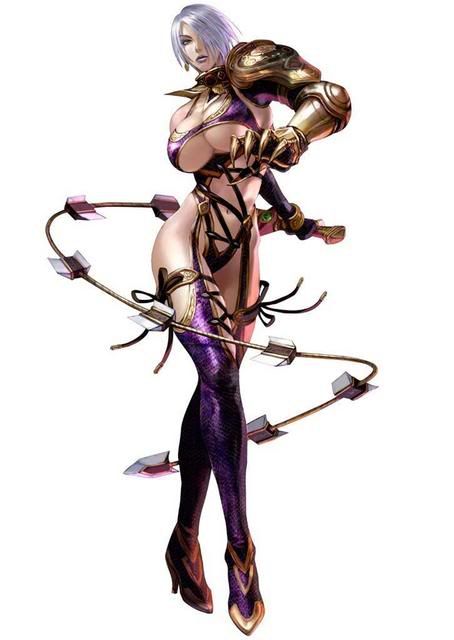
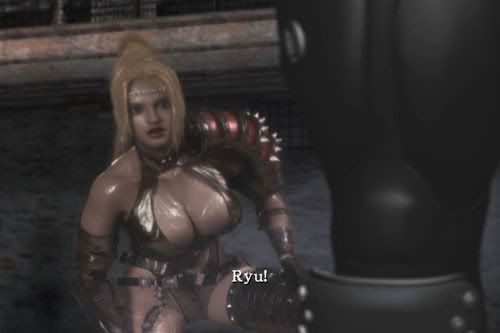
Venturing into the "Oooh, shit! I shouldn't be here!" realm, there's a series of Nintendo DS games that have you investigating witchcraft at a school. In order to out the witches, you have to use the stylus to touch/rub the jail bait witches. I'll leave the areas to be "investigated" up to the imagination.
Really, it seems that a portion of gamers and video game designers/publishers have pushed female character design into palm face FetishLand. Worse, these games DO sell. Very well. With video games becoming much more expensive to develop, promote, and ship due to the massive expansion of the industry, many companies need a "sure hit" to survive and others just want to play it safe. Enter boobs. It sells.
Thankfully, not every company falls into this trend. Nintendo is typicallyconservative of its female characters (here & here), focusing more on game play/design, and their respective games still sell. Valve's Half Life 2 set a new standard for character depth with a female who was very attractive while still being down-to-Earth and normally proportioned. DICE deserves props as well for employing the use of a female that doesn't wrongfully distract from the game. Nod to EA for financing DICE's vision without pressure for change.


As for Mirror's Edge, the final retail product, I have not yet purchased it, though I am still intrigued. I downloaded a playable demo of it a while back and was left impressed. When the price dips, I'll probably take the blue pill.
[...and this is how I open 2009]
The Tifa-Aeris Debates show my age
Stirling,
What you're talking about reminds me of the Great Tifa-Aeris Debates of 1997-1998. Nominally, the issue there was, in a perfect world, who is more compatible with Cloud? The subtext of the debate, though, becomes clearer in retrospect, and it was this: who better confirms your vision of femininity, Tifa (busty, and in immodest attire, but also visibly childlike, and shy) or Aeris (slender, and dressed conservatively, but also outgoing and temperamentally childlike).
(I will note, Stirling, that along with you, I'm somewhat bothered by the fact that I find myself employing the word "childlike" to describe both characters).
But to return to your point, I'm not sure that what rankles me in your story is so much the specific differences between Eastern and Western men's tastes in women. What bothers me more is the assumption made by the fanartist and others that the game designer created a flawed product when he failed to account for their particular tastes in women. The implicit premise that those people rely on is that we ought to be lusting after the women of video games, and when we aren't, then we can blame the game designer for not making them attractive enough.
The idea that a video game heroine ought to be a wet dream is so deeply ingrained now that it passes without our notice. Frankly I'm glad that the game designer in this case ruffled a few feathers with his choices, and not necessarily because his vision of Faith incorporates my own ideas of physical perfection; rather, it's because it shows that the market for video games has broadened to the point where they don't all have to be about adolescent wish-fulfillment anymore.
I haven't played Mirror's Edge, but I think I remember seeing it advertised on TV. You refer to it as "an urban free-running game in first-person perspective." I assume that this means a literal, behind-the-eyes perspective, in which the heroine rarely appears on-screen. Sort of the way that the protagonist's face never appears in gameplay in Doom. Is that right? Because if so, doesn't it seem odd that all this hay should be made over what the girl on the box looks like?
What you're talking about reminds me of the Great Tifa-Aeris Debates of 1997-1998. Nominally, the issue there was, in a perfect world, who is more compatible with Cloud? The subtext of the debate, though, becomes clearer in retrospect, and it was this: who better confirms your vision of femininity, Tifa (busty, and in immodest attire, but also visibly childlike, and shy) or Aeris (slender, and dressed conservatively, but also outgoing and temperamentally childlike).
(I will note, Stirling, that along with you, I'm somewhat bothered by the fact that I find myself employing the word "childlike" to describe both characters).
But to return to your point, I'm not sure that what rankles me in your story is so much the specific differences between Eastern and Western men's tastes in women. What bothers me more is the assumption made by the fanartist and others that the game designer created a flawed product when he failed to account for their particular tastes in women. The implicit premise that those people rely on is that we ought to be lusting after the women of video games, and when we aren't, then we can blame the game designer for not making them attractive enough.
The idea that a video game heroine ought to be a wet dream is so deeply ingrained now that it passes without our notice. Frankly I'm glad that the game designer in this case ruffled a few feathers with his choices, and not necessarily because his vision of Faith incorporates my own ideas of physical perfection; rather, it's because it shows that the market for video games has broadened to the point where they don't all have to be about adolescent wish-fulfillment anymore.
I haven't played Mirror's Edge, but I think I remember seeing it advertised on TV. You refer to it as "an urban free-running game in first-person perspective." I assume that this means a literal, behind-the-eyes perspective, in which the heroine rarely appears on-screen. Sort of the way that the protagonist's face never appears in gameplay in Doom. Is that right? Because if so, doesn't it seem odd that all this hay should be made over what the girl on the box looks like?
Subscribe to:
Posts (Atom)